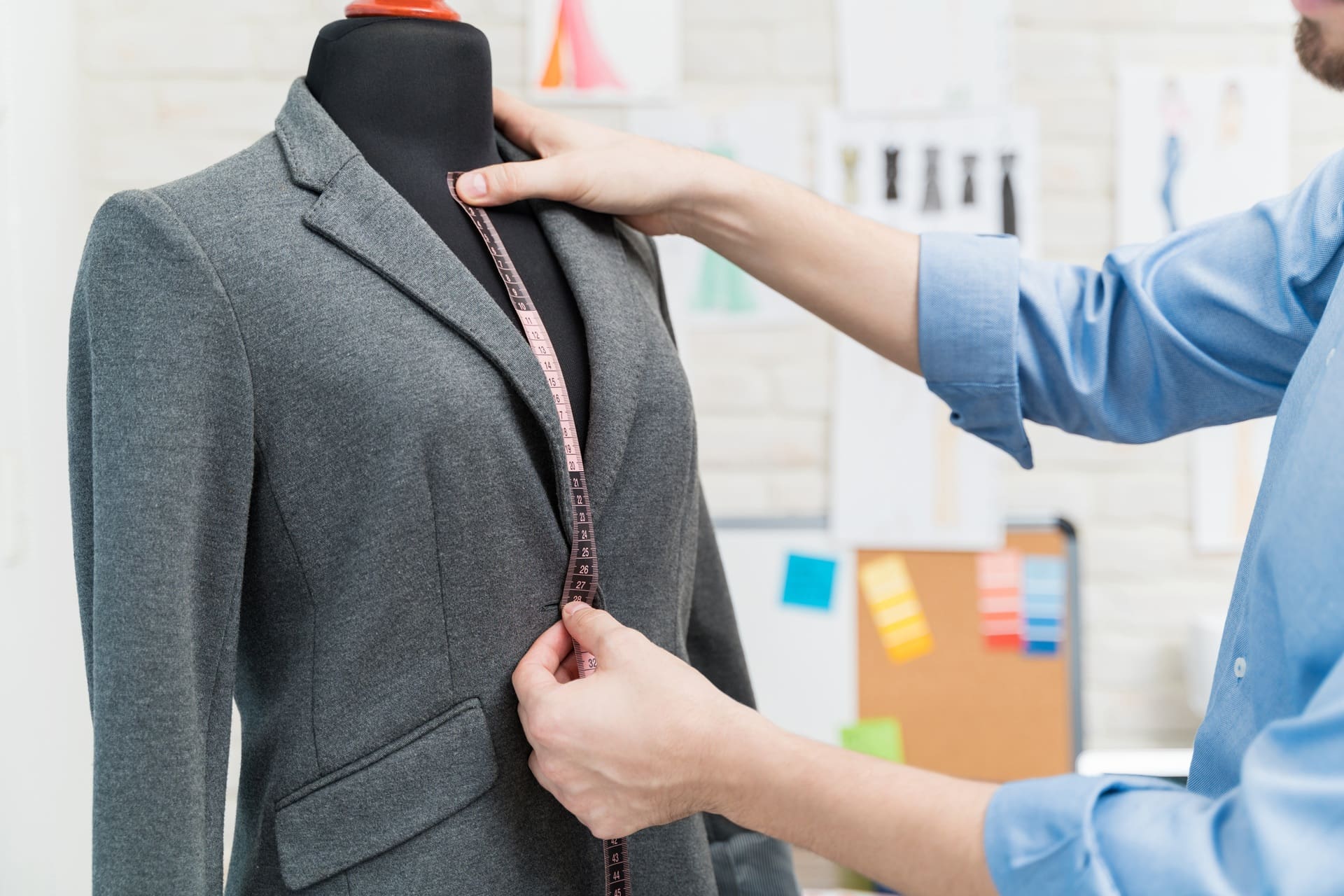
Standing in front of a fitting room mirror while a seamstress circles you with pins and chalk can feel oddly exposing. You don't know where to look or how to stand. You're not sure if what you're feeling is the garment fitting wrong or just the strangeness of the moment.
It gets easier quickly, especially when you know what to expect when you walk in. Here’s exactly what to do before your first alterations appointment.
Your tailor adjusts a garment to fit your body from head to toe. The shoes you wear affect hem length on pants and dresses, and undergarments change how fabric sits and drapes across your shape. Missing either one means the tailor works with an incomplete picture, and the fit will reflect that.
A two-inch heel can shift a trouser break by an inch or more. A structured bra changes how a bodice sits entirely differently from a soft bralette. These aren’t small details. They’re the difference between a garment that fits correctly and one that needs a second round of adjustments.
Picture the outfit exactly as you’ll wear it to the event or occasion. Then pack accordingly:
How you style a garment changes how it fits on your body. A blazer worn over a thick-knit sweater requires different sleeve and shoulder adjustments than when worn alone. A dress belted at the waist behaves differently from the same dress left loose. Your tailor needs to see the full look, not just the individual piece.
If possible, put on the garment before you leave the house and arrive already wearing it. Less time changing in a fitting room means more time on the actual work.
Small styling decisions shift fit in ways that matter during alterations, such as:
Tailors are skilled at reading a garment, but they work from what you tell them. Everyone’s idea of a good fit is different. Some people want a close, tailored silhouette. Others want room to move. Neither is wrong, but your tailor can’t guess which choice you’re after.
Think through your preferences before you arrive. If you have a photo of a fit you love, bring it. If you own another garment that fits you the way you want this one to look, bring that, too. A concrete reference speeds up the conversation and makes the result more accurate.
Be prepared to answer honestly on these points:
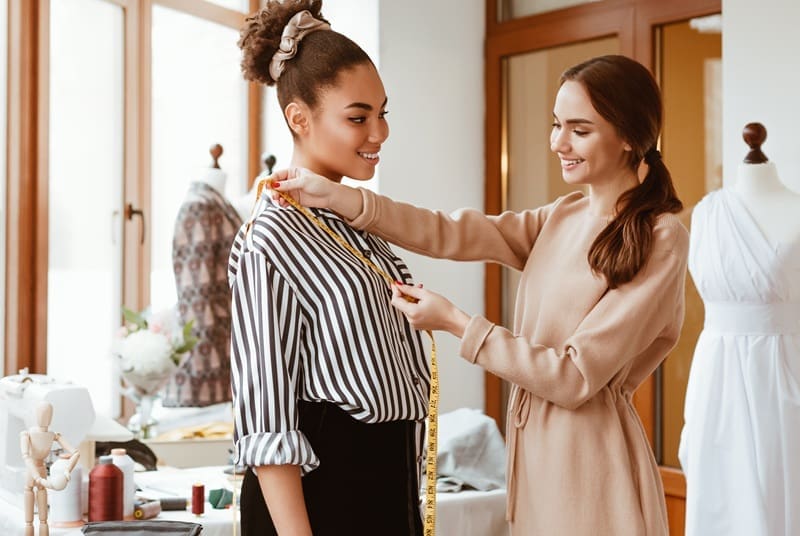
If you’ve never had a fitting before, the pinning process can look a little scattered. It isn’t. Every pin, chalk mark, and fold serves a specific purpose. Your tailor maps out exactly what needs to change, and those marks become their guide once the real work begins.
The most important thing you can do during this part is to stand naturally. Don’t hold your breath, pull your shoulders back, or adjust your posture to look a certain way. Stand how you actually stand. The fitting should reflect real life, not a moment of performance.
Here is the typical sequence during a first fitting:
If something feels wrong or uncomfortable during the pinning, say so immediately. That kind of feedback is exactly what your tailor needs. Don’t wear the garment home with pins still in, and leave any chalk marks in place until the alterations are complete.
Simple alterations, such as a basic hem or taking in a seam by half an inch, are usually finished in one round. More involved work is a different story. Structured garments, formal gowns, and anything requiring significant size adjustments may need a second fitting after the first round of changes is complete.
This isn’t a sign of a problem. It’s how careful tailoring works. The first set of alterations changes how the garment sits on your body, sometimes exposing a small secondary adjustment that wasn’t visible before. A follow-up fitting is how precision gets built in.
If you’re working toward a specific date, tell your tailor up front. That one piece of information shapes how they schedule your work and helps make sure nothing gets rushed at the end.
Once a garment has been tailored, the way you clean and press it may need to change. Hand stitching, reshaped seams, and structural adjustments can be sensitive to high heat or machine washing. Some alterations involve interfacing or stabilizers that react differently to water and steam than the original fabric.
Before you leave your fitting, ask one direct question: has anything changed about how I should wash or press this? Ten seconds of conversation can prevent damage that took considerably longer to complete.
Having a garment altered is simple when you work with a team that knows how to guide you through the process. At Iron Press Cleaners, our on-site seamstress handles everything from everyday clothing repairs to detailed garment alterations. Most work is completed within two to three business days, and we offer FREE Pickup and Delivery Service so you can take care of your clothing without rearranging your schedule.
Bring in your garment and let us help you get the fit you want. Have questions before your first appointment? Our team is happy to walk you through what to expect.
Iron Press Cleaners
