
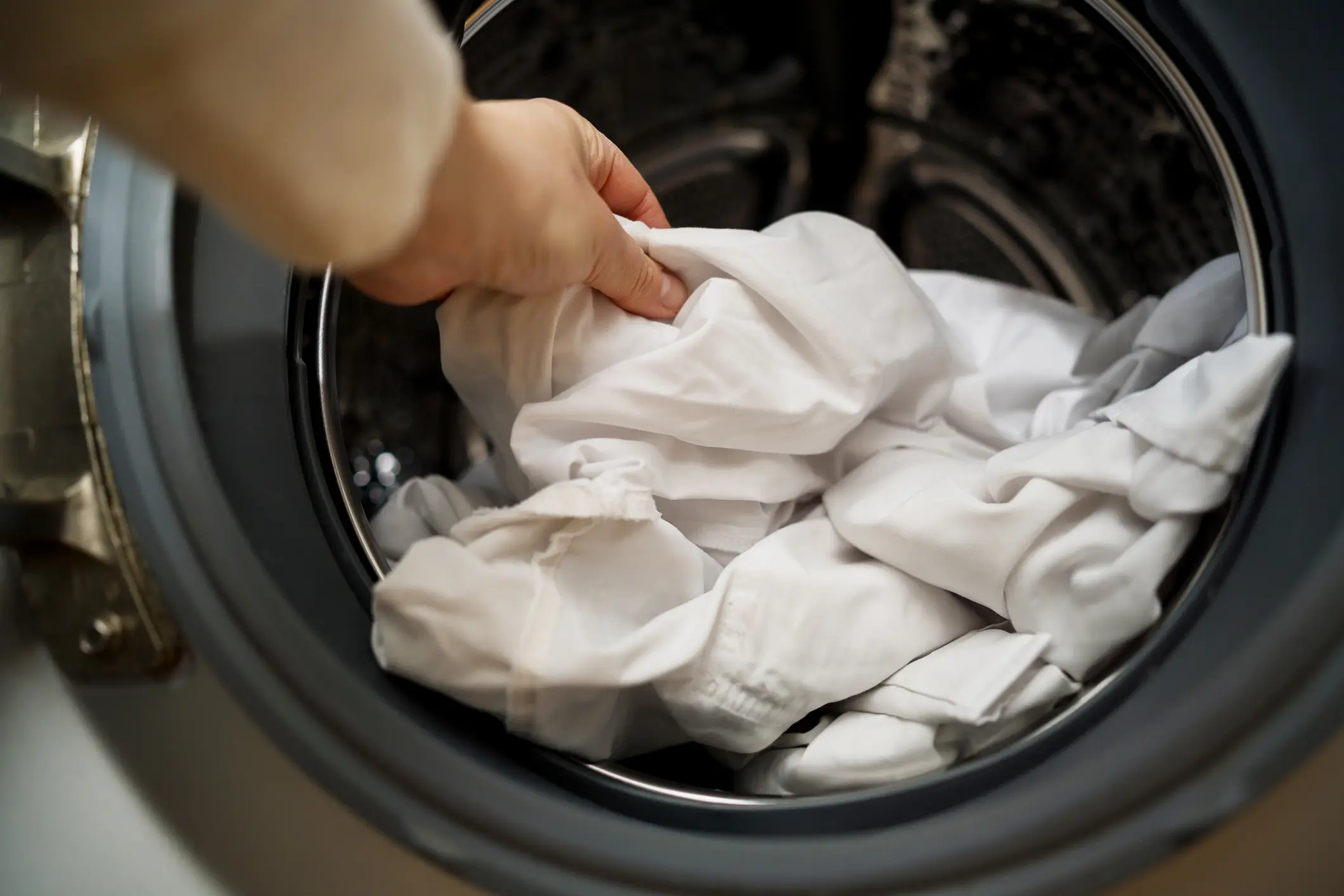
Drying, not washing, is usually the detail that quietly rules out half the laundry solutions renters consider. A portable washer sounds great until there's nowhere for the clothes to actually dry. A laundromat solves that instantly but costs an afternoon. Somewhere between those two extremes sit three more options most renters never hear about, each solving the drying problem in a completely different way.
This guide breaks down all five, starting with the constraint that eliminates the most options first.
Every option below trades money for time in a different ratio. Nothing here is a universal winner. A laundromat costs less per load and more of your afternoon. A delivery service costs more per pound and gives you that afternoon back. Neither choice is wrong, and the right answer depends entirely on your volume, your schedule, and how much space you actually have to work with.
Most people guess their laundry volume instead of counting it, and the guess is almost always off.
Once you have a real number, the rest of this comparison gets much easier to apply to your own routine.
If your building has one, start here even if you've written it off. It's the cheapest option by far, with zero travel time.
The tradeoffs: availability depends on other tenants, so your free evening might be everyone else's, too. Machine condition varies, since a shared washer carries whatever the last person left behind. And you still have to sit through the full cycle, same time cost as a laundromat, just without the bigger machines.
Before your first load in a building machine, run an empty cycle on hot with no detergent. It's a small step that tells you a lot about whether or not the machine has been maintained, and it protects your clothes from residue you didn't put there.
For a lot of people, this is genuinely the right answer, not just the fallback. It's the cheapest option at real volume, and the machines handle comforters and bulky items no home washer manages well.
The cost is time: roughly two hours you need to protect. Some people bring work and make it productive. Others just lose an afternoon.
Most renters don't know this exists, and it's arguably the most useful option here. You leave your bag, they wash, dry, and fold it, and you pick it up later, usually priced per pound and well below full delivery.
It removes the two-hour block without paying for pickup and return. You still travel there and back, just skip the wait. Not every laundromat advertises it, so ask directly.
This sits at the other end of the spectrum: highest cost per pound, zero time from you. Your laundry leaves and comes back done.
That premium buys the collection and return trip, not better washing; drop-off gets you the same result for less if you can travel. It earns its price if you don't have a car, can't fit in a predictable errand, or your volume makes a laundromat trip unmanageable.
Renters overlook this most often; no cleaner's blog will point you toward it since it sends them no business. Countertop and portable washers connect to a tap or sink and work fine for one or two people.
The limits: small capacity, so a full load might mean two or three runs. Bedding's off the table. It needs somewhere to drain. And most don't dry anything, so you've only solved half the problem.
Portable washers need consistent water pressure and a drain that can handle graywater without backing up. Check your unit's hose length against your kitchen layout before buying, since a mismatch is the most common reason these end up unused in a closet within a month.
Washing is the easy half. Drying is what actually determines if an option works for your space.
No outdoor space, no dryer, limited square footage, you're looking at a rack that takes a full day or more and adds real moisture to your air. That constraint eliminates some options above and reshuffles the rest, so it belongs in the decision, not as an afterthought.
A single load on a standard rack needs roughly the footprint of a twin mattress, and it ties up that space for 24 hours or more depending on humidity. If that's not space you have to spare, any option without built-in drying, including a portable washer, only gets you partway there.
One or two loads points toward options with a per-load cost. Four or more points toward volume-friendly options such as a laundromat or delivery service.
If your schedule is unpredictable, anything requiring you to sit through a cycle becomes a source of stress rather than a solution.
No dryer and no outdoor space rules out a portable washer as a complete answer and makes drying, not washing, your real constraint.
Low volume with a flexible schedule and drying space usually points toward a building machine or laundromat. High volume with an unpredictable schedule and no drying space almost always points toward delivery or drop-off. Everything in between is where most people actually land.
You don't have to pick one option and stick with it. A laundromat or building machine for routine loads, paired with delivery for bulky items and busy weeks, is a common combination. So is drop-off for regular laundry and a laundromat trip when bedding needs washing.
A laundry service usually fits as the piece that covers what your other option can't, not as a full replacement.
If you've read through all of this and landed on delivery, either as your main option or as the piece that covers your busy weeks, a few points are worth checking before you commit to a provider:
You've now seen several options, and depending on your routine, one of the earlier solutions may be all you need. But when limited time, lack of transportation, or a large laundry load makes doing it yourself impractical, pickup and delivery can take the entire process off your hands.
Iron Press Cleaners offers FREE laundry Pickup and Delivery Service in Midland, Texas, with each load professionally washed, dried, and folded. This can be especially helpful if you don't have the space or equipment to manage drying at home.
If you're looking for a Wash and Fold Laundry Service, consider Iron Press Cleaners when convenience, transportation, or laundry volume becomes the deciding factor.
Contact Guide:
