
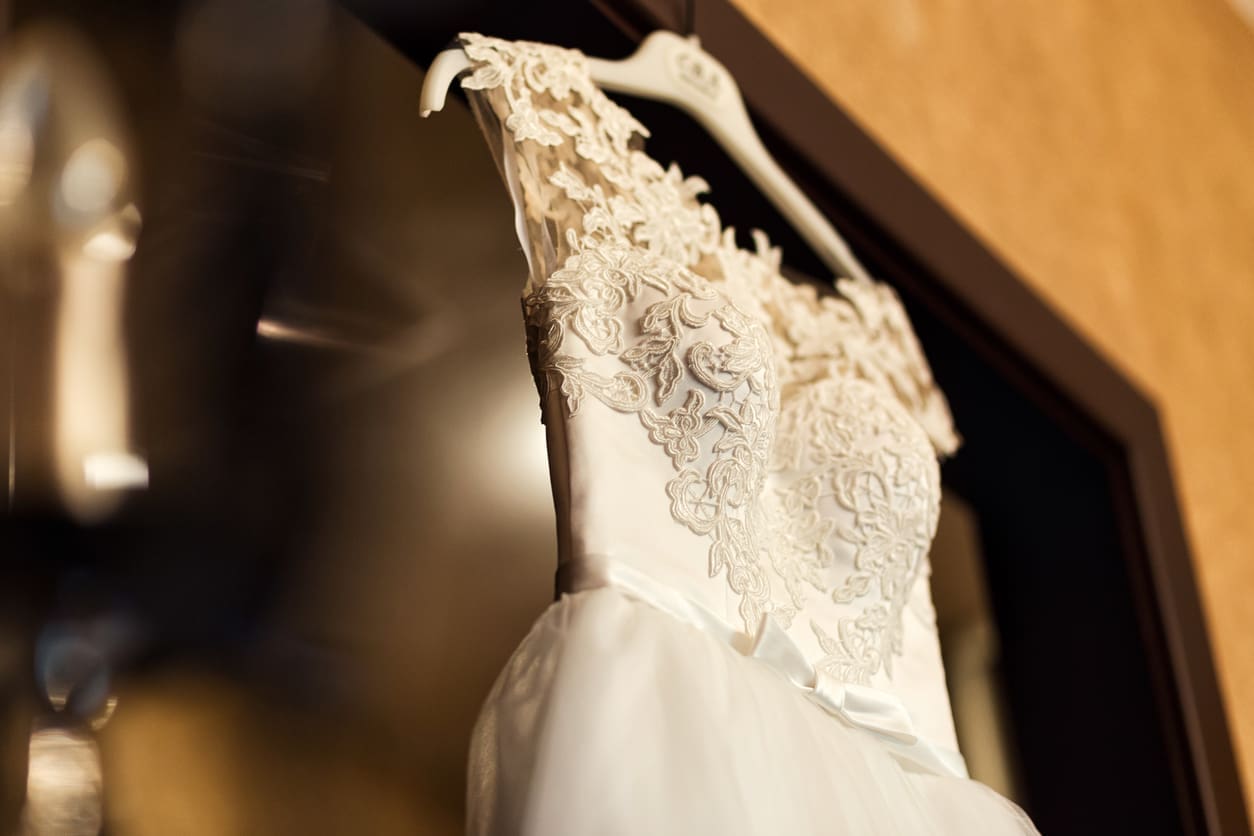
The first instinct when you find a yellowed wedding dress is almost always wrong. Bleach. Vinegar. Hot water. A trip to the regular dry cleaner down the street. Stain remover sprayed directly on the spot.
Wedding dresses are constructed from delicate fabrics with finishes and embellishments that react badly to most household treatments, and yellowing in particular needs a very specific kind of intervention.
So before you do anything, here's what's worth understanding about what's happening and what comes next.
Yellowing is the single most common issue with stored wedding dresses. It happens to dresses of every fabric type, every price point, and every storage method. In most cases, professional wedding dress cleaning can significantly reduce or fully reverse the discoloration, especially when you act quickly.
You did not ruin your dress. You caught a problem that has a solution.
The longer yellowing sits, the deeper it bonds into the fibers. A dress treated within months of noticing discoloration responds far better than one left for another year. If you just noticed it today, that timing works in your favor. Do not wait.
The dress did not get dirty in storage. It already carried invisible residues when it went into storage: perspiration, body oils, champagne, makeup, even the natural oils from your hands during alterations. On white fabric, these residues are invisible at first. Over time, they oxidize, meaning they go through a slow chemical reaction with air that turns them yellow-brown.
The dress looked fine when you stored it because the reaction had not progressed far enough to see. Now it has.
Heat accelerates oxidation. A wedding dress stored in a warm Texas closet, garage, or attic is in one of the worst possible environments for long-term preservation. Midland summers push temperatures well past what fabric and residues need to speed up that chemical reaction. If your dress was stored somewhere without climate control, that is almost certainly a contributing factor – not your fault, but worth knowing.
This is the part that matters most. Here is exactly what to do today.
This is critical. Do not apply:
Each of these is widely recommended online. Each process can permanently increase the damage and make professional restoration harder. The answer to “how to clean a wedding dress” at home is: you don’t. A specialist handles this.
Come prepared with:
This helps the cleaner prioritize and quote accurately.
Why Home Remedies Make Yellowing Worse Instead of Better
Every option below is a common recommendation online, but each of them carries a real risk to bridal fabric.
Weakens fibers permanently and causes white splotching on a yellowed background. The contrast actually makes discoloration more visible, not less.
Create uneven lightening on delicate weaves. You may end up with a patchy dress instead of a yellowed dress, and patchy is harder to fix.
A popular tip that causes real damage. UV exposure weakens the fabric weave over time and cannot be reversed after the fact.
Create water rings on silk and can affect dye on colored accents, sashes, or embroidery, even when used diluted.
Some outcomes cannot be undone after a home attempt:
If any of these have already happened, tell the cleaner up front. They need the full picture before they begin.
Here is an honest breakdown of what to expect based on how far the yellowing has progressed.
Turnaround is typically one to three weeks, depending on severity and treatment method.
If you are in the Midland area, look for a cleaner with specific experience in bridal garments, not just general dry cleaning. Bridal fabrics, construction, and embellishments require different handling than standard garments. Ask directly whether they have worked with yellowed dresses and what their process involves.
Yellowing does not pause while you decide what to do next. Every week the discoloration sits untreated, the oxidation bonds deeper into the fabric, and the window for a full restoration gets smaller.
At Iron Press Cleaners, we have been handling wedding dress cleaning and preservation in Midland, Texas since 1984. We assess every dress before any work begins, so you know exactly what to expect before we touch a single fiber.
Bring in your dress this week. The sooner we see it, the more we can do for it.
