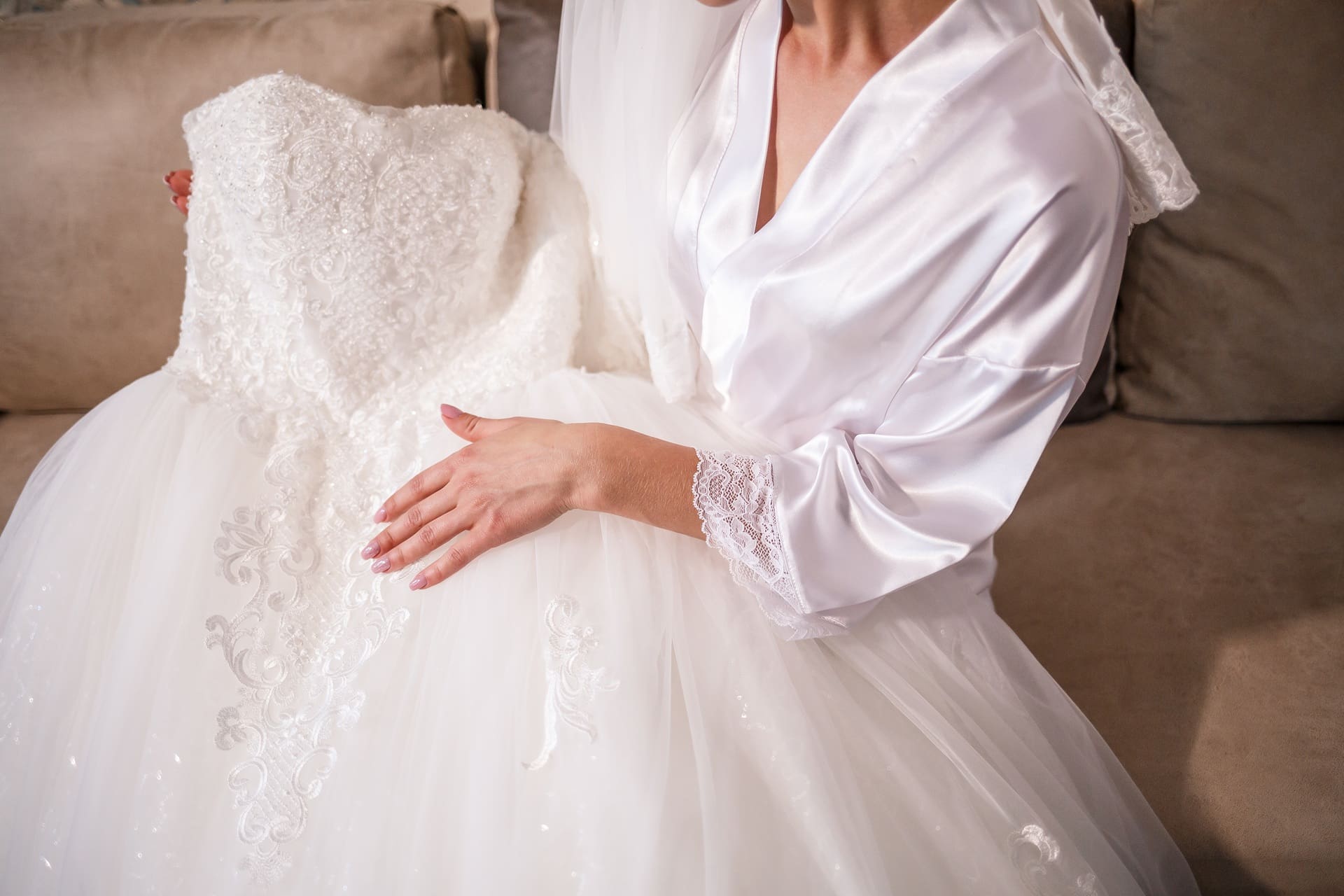
A year ago, your wedding dress was the center of one of the most meaningful days of your life. Today, it may be carefully folded away, holding memories instead of movement. And because it’s no longer in use, it feels preserved simply by being stored.
Yet bridal fabrics are sensitive by nature. Subtle chemical reactions and pressure from folding can already be affecting the material, even if you don’t see it yet. Most of these shifts aren’t dramatic, but they can compound over time.
Let’s take a thoughtful look at how your dress may fare during its first year and how that year can look very different depending on whether preservation was done or delayed.
The first year after your wedding is critical for your dress, even if it looks perfect in the closet. Tiny residues and stresses begin to act on the fabric almost immediately, and many changes are invisible at first.
What seems harmless in the short term – sugar spills, sweat traces, and folds – can gradually cause long-term damage. Without intervention, this early period sets the stage for yellowing, stiffening, and structural weakening.
Even when a dress appears spotless, chemical reactions are quietly underway. Oxygen, light, and residual body oils interact with fibers over months, initiating subtle changes. These reactions can cause uneven yellowing that often starts in less visible areas. Addressing oxidation early is the most effective way to maintain fabric integrity and color consistency.
Sugary spills from reception treats or beverages may not seem concerning at first. However, sugar residues can crystallize within fabric fibers, creating permanent stains. Once crystallized, these spots become stubborn and require professional intervention to remove. Early cleaning prevents sugars from forming long-term discoloration.
Folding a dress for storage without support may feel harmless for a few months. Yet, repeated folding creates stress lines that weaken fibers over time. These stress points can lead to creases that are difficult to relax later, and they can also serve as early sites for yellowing or fiber brittleness. Strategic folding or rolling is essential to prevent lasting fabric damage.
Yellowing often starts under the surface or in low-light areas, making it hard to notice at first glance. However, early oxidation and residue absorption progress silently, so waiting too long can allow damage to become permanent. Professional preservation targets these invisible early changes to keep your dress looking fresh for decades.
A year without professional preservation can leave subtle but noticeable damage across your wedding dress. Oxidation, residual stains, and fabric stress accumulate quietly, and often the dress appears worse in hidden areas first.
This table outlines what typically happens to different components after 12 months of home or improper storage:
| Area / Issue | Condition After 12 Months Without Preservation | Details |
|---|---|---|
| Seams and folds | Yellowing along the waistline, pleats, and hems | Oxidation of body oils and sweat causes discoloration |
| Underarms | Discoloration in the lining and padding | Residual deodorant and sweat salts create brownish stains |
| Hemline | Set-in dirt and sugar stains | Floor contact leaves particles and sugary residue embedded |
| Fabric flexibility | Stiffening in folded areas | Fibers lose elasticity due to compression and minor oxidation |
| Storage box effects | Minor acid transfer | Cardboard or low-quality boxes release acids that tint fabric over time |
Even if the dress looks fine at first glance, minor damage is accumulating. Early attention can prevent further deterioration.
Understanding these hidden risks emphasizes the importance of timely preservation.
With professional preservation, the same dress remains nearly identical to its original condition. Treatment neutralizes residual oils, sweat, and stains, while specialized storage techniques prevent further damage. Acid-free materials, controlled folding, and proper cushioning all play a role.
The table below highlights what preservation achieves compared to an unprotected dress:
| Feature | Condition After 12 Months With Professional Preservation | Benefits |
|---|---|---|
| Color retention | Bright, uniform tones | Oxidation is minimized through limited oxygen exposure |
| Fabric flexibility | Smooth, resilient fibers | Proper folding and cushioning prevent stiffness |
| Acid-free storage protection | No discoloration from boxes | Acid-free materials eliminate chemical migration |
| Support and folding | Correctly positioned and cushioned | Reduces permanent creasing and fabric stress |
| Oxidation risk | Significantly reduced | Residual sugars, oils, and perspiration are neutralized |
The preserved dress maintains not only color and flexibility but also structural integrity. This ensures it is ready for display, heirloom storage, or future use.
Professional preservation is an investment that guarantees your dress continues to look as beautiful as it did on your wedding day.
Not all discoloration is obvious at first glance. Hidden areas, where fabrics come into contact with skin, sweat, or tight folds, are the first to show signs of aging. Addressing these areas proactively ensures visible sections remain flawless.
Sweat accumulation along the underarms, neckline, and side seams accelerates oxidation. Since these spots are shielded from direct light, yellowing develops unnoticed until damage spreads outward. Preservation neutralizes residues before color change becomes visible.
Linings absorb oils and residues from body contact. Seams bear tension from movement, which accelerates discoloration in these hidden layers. Regular inspection and early cleaning can prevent visible surface yellowing.
Beading and lace may hide subtle staining beneath them. These concealed zones trap oils and dust, creating pockets where discoloration starts. Preservation specialists treat these areas carefully, ensuring decorative details remain bright and intact.
Timing is critical to maintaining the integrity of a wedding dress. The sooner a dress is professionally cleaned and preserved, the better its long-term condition. Waiting increases the likelihood of set-in stains, yellowing, and fiber weakening. Even if some months have passed, acting now can dramatically slow further deterioration.
Immediate attention to residues prevents them from crystallizing or oxidizing. This is the sweet spot for removing sweat, sugar, and makeup traces and preserving the pristine appearance of the dress.
Even after several months, professional cleaning and storage remain highly effective. Early intervention stops ongoing chemical reactions and stabilizes folds and embellishments. A dress preserved within the first year retains nearly the same condition as it had on the wedding day.
Delaying preservation increases risk without improving results. Residues continue to act on fibers, folds, and embellishments. Scheduling preservation sooner rather than later is the safest way to protect your investment, ensuring your dress can be enjoyed or passed down for generations.
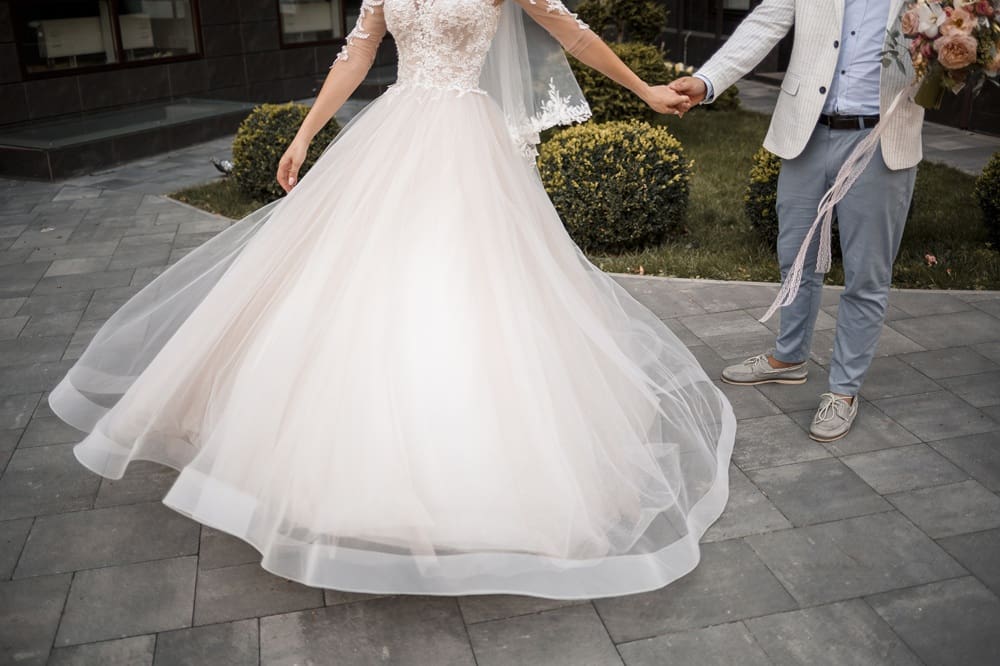
Secure your wedding day memories by preserving the dress that carried you through one of life’s most meaningful moments. Your dress deserves more than storage. It deserves expert care that protects its beauty today and preserves its story for the future.
At Iron Press Cleaners, we provide professional Wedding Dress Cleaning and Preservation Service in Midland, Texas, with one clear goal: turn today’s dress into tomorrow’s heirloom. With over 40 years of experience, our team expertly handles delicate fabrics, lace, beading, and intricate details using a process that blends time-tested techniques with today’s best cleaning technology. The result is trusted, long-term protection against yellowing, stains, and fabric damage.
Protect your dress while it’s still at its best. Call us at (432) 389-2310 or (432) 685-0139 to schedule a Wedding Dress Cleaning and Preservation Service.
